
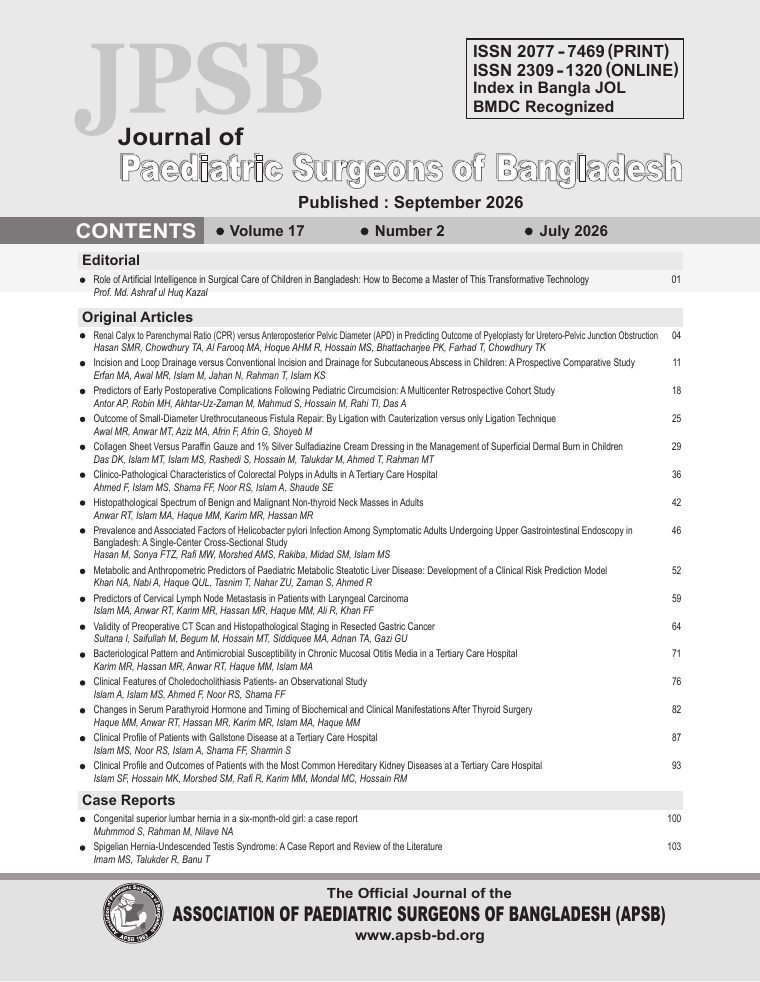
Bacteriological Pattern and Antimicrobial Susceptibility in Chronic Mucosal Otitis Media in A Tertiary Care Hospital
Authors
Keywords
Abstract
Background: Chronic mucosal otitis media (CMOM) is a lasting middle ear infection that leads to ear discharge and is a preventable cause of hearing loss. Pseudomonas aeruginosa and Staphylococcus aureus are prevalent pathogens, exhibiting rising antimicrobial resistance. This research sought to determine bacterial profiles and patterns of antimicrobial susceptibility in CMOM in a tertiary care facility in Bangladesh. Methods: A cross-sectional study took place at Dhaka Medical College Hospital from January 2022 to June 2023, including 120 CMOM patients experiencing active ear discharge. Ear swab samples were gathered for bacterial culture and identification, then antimicrobial susceptibility testing was conducted with the Kirby–Bauer disc diffusion method as per CLSI guidelines. Demographic, clinical, microbiological, and susceptibility information were examined with SPSS version 24.0, considering p<0.05 as statistically significant. Results: A total of 120 CMOM patients were analyzed, with an average age of 31.8 ± 15.2 years and a majority of males (56.7%). Bacterial growth occurred in 90.0% of samples, resulting in 114 isolates, predominantly Pseudomonas aeruginosa (38.6%) and Staphylococcus aureus (25.4%). Gram-negative isolates exhibited the greatest sensitivity to meropenem and amikacin, whereas Gram-positive isolates demonstrated the highest sensitivity to linezolid and vancomycin. Culture positivity was considerably greater in patients with ear discharge lasting over 12 months (96.6%, p=0.013). Conclusion: Pseudomonas aeruginosa emerged as the primary pathogen in CMOM, with Staphylococcus aureus following, and Gram-negative bacteria being more prevalent. Meropenem, amikacin, linezolid, and vancomycin displayed the greatest antimicrobial efficacy, highlighting the significance of therapy based on culture results and ongoing monitoring of local resistance trends.
Journal of Paediatric Surgeons of Bangladesh (2026) Vol. 17 (2): 71–75